A lot of people who start preparing after a long outage make the same first move. They buy something: a bigger generator, a few cases of water, a solar kit with good reviews. Then the gear sits in the garage, and the next outage finds the same gaps the last one did.
I've made that mistake. What fixed it for me was an order: one system at a time, built and tested before I needed it.
Start with the last outage, not a shopping list
Before you spend a dollar, sit down with everyone in the house and walk back through the last long outage, hour by hour. Note when water stopped being a sure thing, when the freezer turned into a worry, and when the house got too cold, too dark, or too quiet because nobody knew what was going on outside.
Write each one down. That list is your plan. It fits your house, your lot, and your weather, which is why it's worth more than any general list you'll find, including mine.
Fix the gap that would hurt first
Rank the list by what would hurt first and worst. For most households coming off a bad outage, that's water. You feel its loss within hours, and it's also where the cheapest, fastest fix lives. Start with what you already have: your water heater holds a full tank of clean water, so find its drain valve now and learn how to shut off its power or gas before you'd ever draw from it. Then store some, following the Ready.gov guidance on water, and put a screened rain barrel under a downspout.
After water, a sensible default goes like this. Power comes next for the few things that truly need it, like the well pump, a few lights, and the phones, starting small. Then food, because a garden takes a season to start producing. Then heat and cold storage, then security, and last the emergency layer that ties it all together. Where winters are hard, heat may need to jump the line. Your list may run in a different order. Trust your list over mine.
One thing doesn't wait its turn: a 72-hour kit with water, food, light, first aid, and a radio, packed in one box everyone in the house can find in the dark. It's an afternoon's work, and it carries you through the first days while the bigger systems come together.
One system at a time
A system's more than gear. It's the gear, the place it lives, the supplies it runs on, and everyone in the house knowing how to use it. A generator isn't a power system until it has a safe spot outside, fuel you rotate, and a short list of what it runs.
Build one system, finish it, and move on. Most of them fit in a weekend. Some take more than one, and the ones that touch your house wiring belong to an electrician. Either way, don't start the next one until this one's done.
Test it before you need it
Every system gets a trial run on an ordinary day. Pick a Saturday, pretend the power's out, and live on your backups for an afternoon. You'll find the missing adapter, the flashlight with dead batteries, and the part you meant to buy. It's better to find them on a quiet day than in the dark.
Know where the line is
Some of this is weekend work and some of it isn't. Knowing the difference is part of the plan.
A generator runs outside, always. Never in the garage, even with the door up, and never near a door, window, or vent. Carbon monoxide from portable generators kills people every year, and you won't smell it coming. Put battery-powered or battery-backup CO alarms in the house, and follow the CDC's power outage safety guidance on where the generator goes.
Never plug a generator into a wall outlet or the dryer outlet. Feeding power back into your house wiring can electrocute a line worker on the street and start a fire inside your walls. If you want a generator or a battery to run house circuits, a licensed electrician installs a transfer switch or an interlock, with the permit your local building office requires. That's a job for a pro, every time.
Rooftop solar may go dark with the grid. Most grid-tied systems shut themselves off when the grid goes down, by design, unless they've been built with a battery and the right inverter to keep running. The Department of Energy explains it in its solar and resilience basics. Ask your installer how yours behaves before you count on it.
Rainwater isn't drinking water. Rain off a roof can carry germs and chemicals, and the CDC says plainly that it isn't necessarily safe to drink. Filtering water isn't the same as purifying it. Collection rules also vary by state and county, so you'll want to check the rules where you live before you build.
Anything that burns fuel indoors has to be made and vented for that job, inspected where your county requires it, checked before the cold season, and backed by working battery-backup CO alarms. Never heat with the kitchen oven, and never bring a grill or an outdoor heater inside.
Keep the food side simple
The freezer is usually the first thing people worry about when the power goes, and for good reason. I wrote about that in A Pantry That Doesn't Depend on the Freezer. The short version: keep more of what you eat in forms that don't need power.
Where the full plans live
What you've just read is the order of thinking. The builds themselves are in The Off-Grid Survival Manual, from rainwater catchment and a gravity-fed filter to a 12-volt battery bank with LED lighting and a 72-hour kit. Each one comes with a labeled diagram, a real materials list, a cost band, and an honest call on whether it's worth your Saturday. The book names one start-here build in each system and lines them up into a single ladder, so you don't stall choosing.
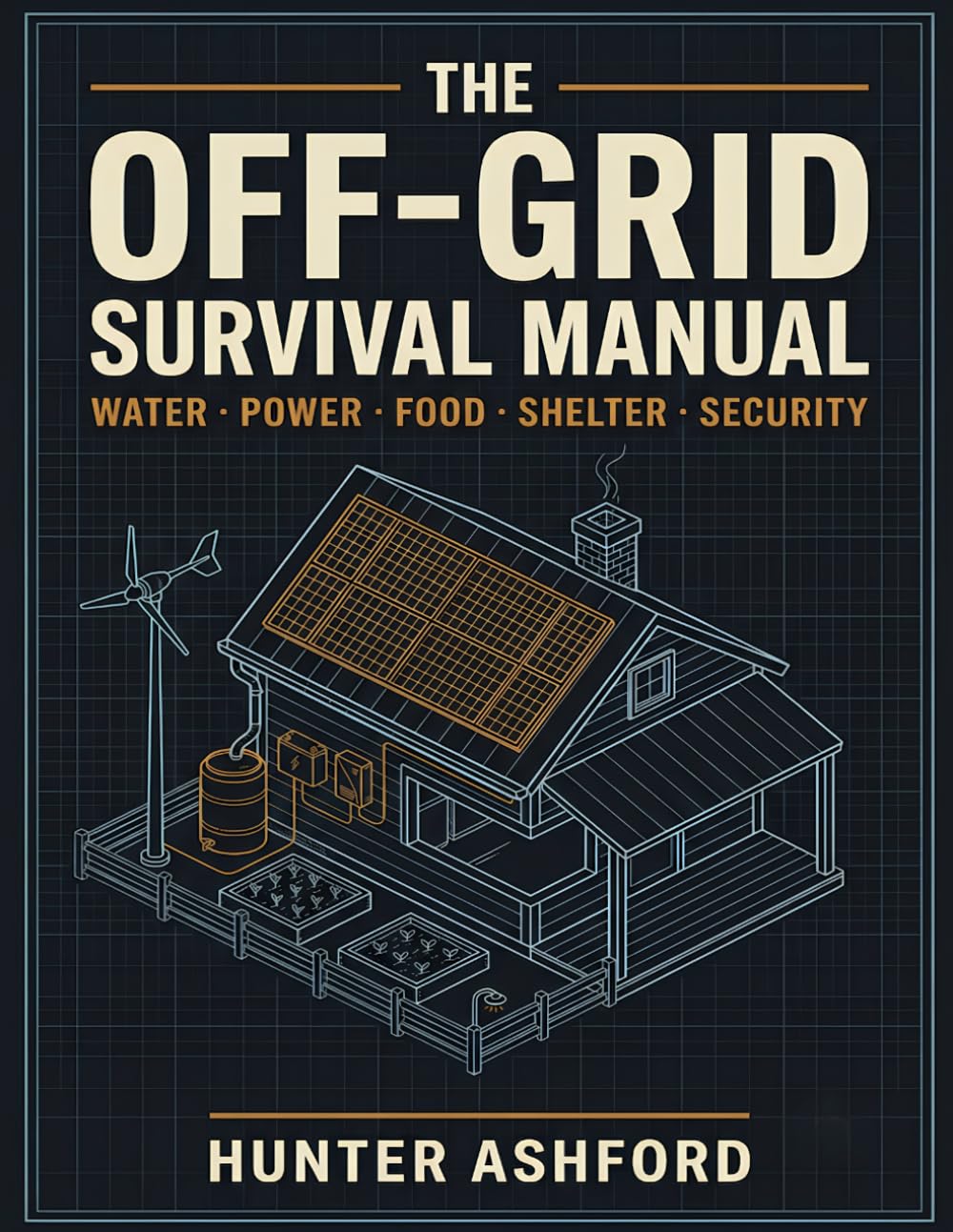
More than twenty builds for water, power, food, shelter, security and emergency, each with a labeled diagram, a real materials list, a cost band and a worth-it verdict.
About the book