Hunter Ashford
Hunter Ashford › Books › The Off-Grid Survival Manual
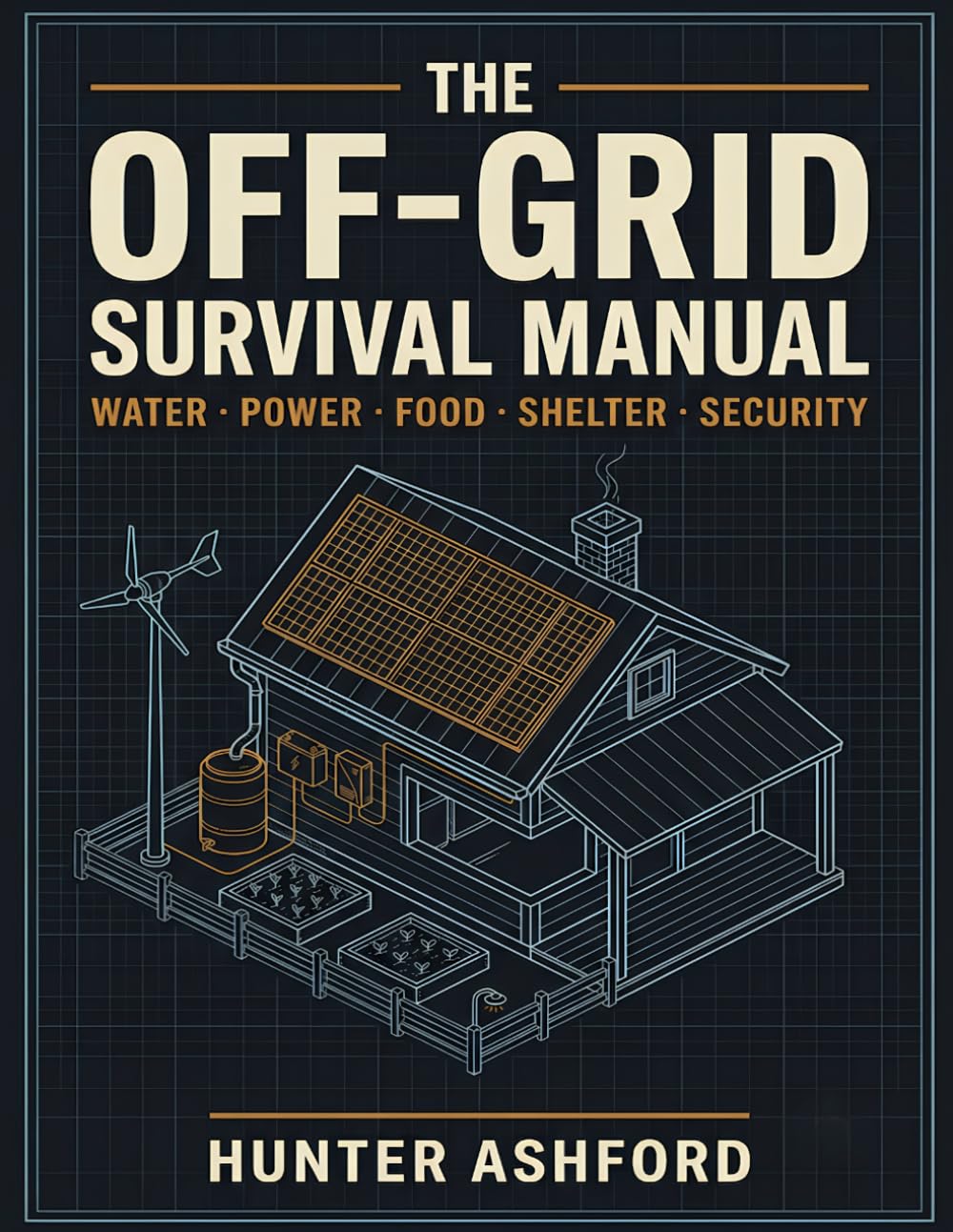
The Off-Grid Survival Manual, book cover
Preparedness Library · Book 1

The Off-Grid Survival Manual

Step-by-Step DIY Projects for Water, Food, Power, Shelter & Security to Keep Your Family Self-Sufficient in Any Crisis

More than twenty complete builds for water, power, food, shelter, security and emergency. Each one comes with a labeled diagram, a real materials list, an honest call on skill, time and cost, and a verdict on whether it's worth your time.

🇺🇸 Paperback on AmazonKindle edition
Series
The Hunter Ashford Preparedness Library, Book 1
Paperback
140 pages, 8.5 × 11 in
Interior
Black and white, with line diagrams
Published
August 23, 2026
The reader

Who it's for

You already own some of the gear. A generator, a few water cans, a rain barrel in the corner of the yard. What you don't own yet is a system, and you know it, because the last long outage showed you exactly where the gaps were.

You can read a plan and you've got tools. You know the difference between watching a video and doing the job, and you want to know which jobs are yours and which need a licensed pro. Your time comes in Saturdays, and every dollar has to earn its place next to the mortgage.

This book is built for those Saturdays. One weekend, one working system. Then the next one.

The book

What's inside

Read a page

Systems, not gadgets

There's a gap that catches almost everybody, and it's worth naming before you spend a dollar. It's the gap between owning gear and owning a system.

Owning gear is easy. You buy a generator, a case of water, a barrel, a solar panel off the internet, and you stack it in the garage feeling a little better. I've done it. Most people who care about this have done it. The trouble is that a garage full of gear is not the same as a house that keeps running. Gear is a pile of parts. A system is those parts wired, plumbed, and tested into something that works the night you need it.

From the Orientation chapter, The Off-Grid Survival Manual
Straight talk

Where it draws the line

Some jobs aren't weekend jobs. When a build means tying an inverter into your home's electrical panel, the book tells you to call a licensed electrician, with no exceptions. Nothing involving solar, batteries or household AC power is labeled below intermediate.

Rules on rainwater, gray water, building permits and backyard chickens change from one county to the next. The book flags each of them so you check before you build. And it keeps one difference clear the whole way through: filtering water isn't the same as purifying it.

It won't take your house completely off the grid, and it doesn't pretend to. It gives you a plan that's already built when the power goes out.

Before you buy

Common questions

Do I need building experience?

You'll need to be handy and willing to learn. Every build states its skill level honestly, and the power projects start at intermediate.

Is the book in color?

No. The interior is black and white with line diagrams, printed at 8.5 × 11 so you can work from the page. There's also a Kindle edition.

Does it give prices for materials?

It gives a cost band for every project. Exact prices change by region and by month, so the book doesn't print them.

Where should I start?

With the start-here order at the front of the book. It tells you which build to take on first, so you don't stall choosing.

From Hunter's notes

Related reading

More from Hunter Ashford

Other guides

See all four books

The Reader List

Hear when the next guide is out

You'll hear when a new guide is finished. That's the whole promise: no schedule, and nothing you didn't ask for. Double opt-in, and one-click unsubscribe on every email.

We only send reader emails, and we never share your address. By joining, you agree to the Privacy Policy.