Hunter Ashford
Hunter Ashford › Books › The Survival Foraging Field Guide
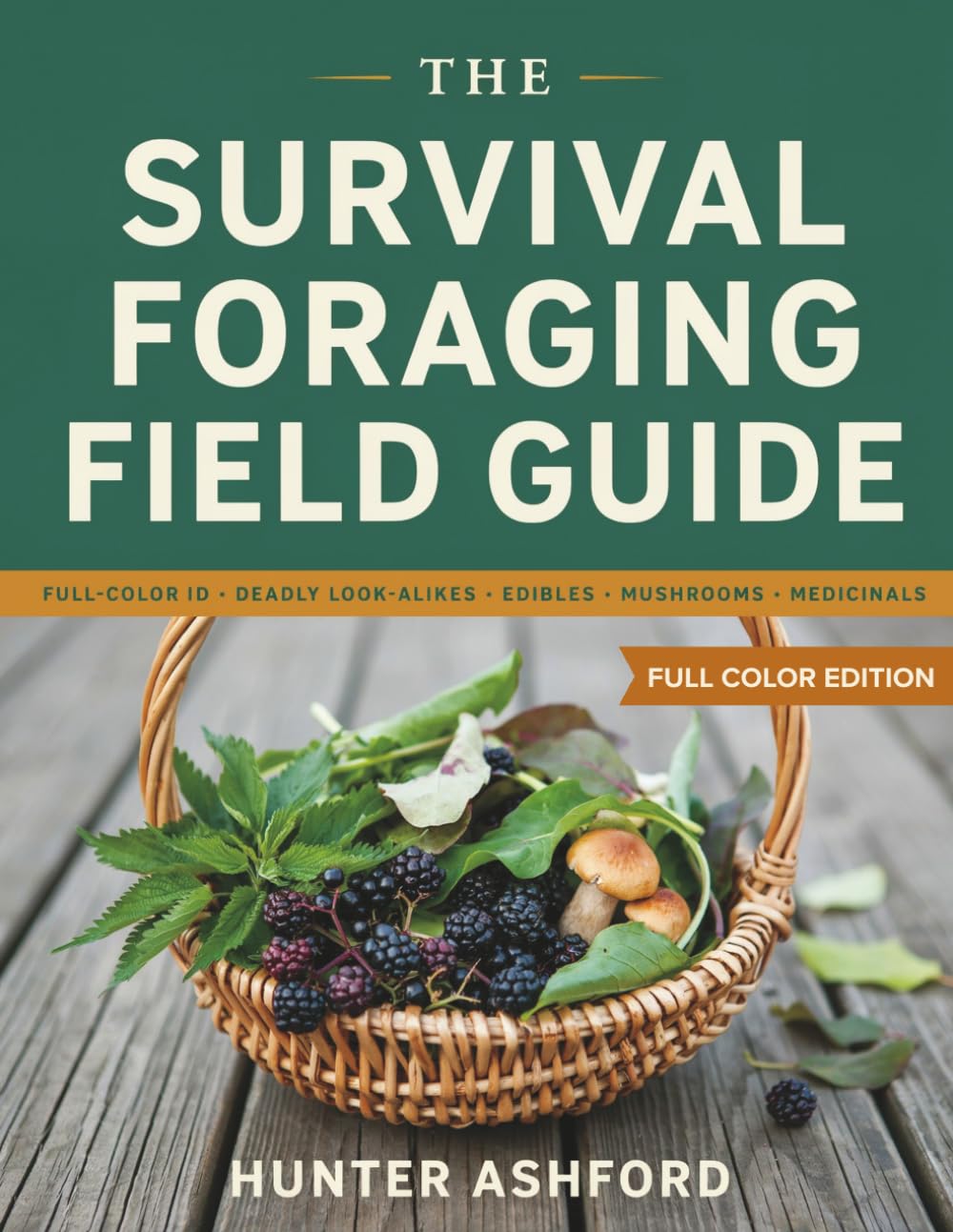
The Survival Foraging Field Guide, book cover
The Self-Reliant Provider · Book 1

The Survival Foraging Field Guide

How to Find, Identify, and Prepare Wild Edible Plants, Mushrooms, and Natural Resources for Emergency Preparedness and Self-Sufficient Living

Fifty-plus edible wild plants, beginner-friendly mushrooms and wild medicinal herbs, in full color. The dangerous look-alikes get the clearest pages in the book, side by side with the detail that sets them apart.

🇺🇸 Paperback on AmazonKindle edition
Series
The Self-Reliant Provider, Book 1
Paperback
139 pages, 8.5 × 11 in
Interior
Full color
Published
June 10, 2026
The reader

Who it's for

You can fix an engine and read a plan, but naming a wild plant is the one place you still feel like a beginner. Your plant app gave you three answers for the same leaf. You've walked past the same green thing on the same trail for a year, and you still won't eat it.

That caution is right, and the book keeps it. What it adds is a careful way to get to one answer, and the habit of walking away when you can't.

The book

What's inside

Read a page

Supplement your stored food, don't replace it

Wild food is not going to replace your stored food. Anybody who tells you that you'll "live off the land" is selling something, usually a course. I have fed my family from the wild for more than thirty years, and I have never once lived off the land, and I don't know anyone honest who has. The woods are generous in May and stingy in February. A good patch of nettles is a real pot of greens, and the most nourishing wild plant you'll cook all spring; it still isn't a grocery run.

What wild food does is stretch what you have. It turns ninety days of rice and beans into a hundred and twenty. It puts greens on the table the week the produce aisle is bare and the next truck is two days out. It gives you options in the exact moment options are what you don't have. Think of it as the bottom layer of your food security, under the pantry, under the chest freezer, under the garden. The layer that doesn't need a working supply chain, a paycheck, or a power grid to fill.

From Chapter 1, Why Wild Food, Why Now, The Survival Foraging Field Guide
Straight talk

What it won't promise

Wild food stretches a pantry. It doesn't replace one, and the book won't tell you that you can live off the land.

No book can promise you'll never make a mistake, so this one teaches the habit at the heart of careful foraging instead. The medicinal herbs are shown as plants valued in traditional use, with a note to check with a professional. Nothing here is a treatment.

It's a full-size 8.5 × 11 book, not a pocket guide. It isn't an encyclopedia, and it isn't written for a single state.

Before you buy

Common questions

Is the book in color?

Yes. It's in full color throughout, including the look-alike comparisons.

Will it fit in a pocket?

No. It's a full-size 8.5 × 11 paperback. There's also a Kindle edition.

Does it cover mushrooms?

Yes, a short list of distinctive mushrooms that suit a beginner. It's deliberately not a mushroom encyclopedia.

Will it work where I live?

It's organized by season and includes regional notes. It isn't written for one state, so check local rules on where you're allowed to forage.

More from Hunter Ashford

Other guides

See all four books

The Reader List

Hear when the next guide is out

You'll hear when a new guide is finished. That's the whole promise: no schedule, and nothing you didn't ask for. Double opt-in, and one-click unsubscribe on every email.

We only send reader emails, and we never share your address. By joining, you agree to the Privacy Policy.