The freezer is usually what does it. Somewhere around the second day of an outage, you open the lid, feel the cold going soft, and start thinking about what you should have bought. A generator, a battery power station, maybe panels on the roof. Each covers a different part of an outage, and buying the wrong one first fills a garage with gear that doesn't carry you through the next storm.
So before you spend anything, here's what each one does well, where each one runs out, and the one connection none of them should ever make without a licensed electrician.
Start with the list, not the gear
Every backup power decision starts with one question: what has to keep running, and for how long?
Sit down with a pencil and write it out. The well pump, if you're on a well. The refrigerator and the freezer. A few lights. Phones and a radio. A medical device that needs power, if anyone in the house uses one. The furnace blower, if your heat depends on it. Next to each item, write how many hours a day it really needs to run. That list decides everything that follows.
The generator: a lot of power, for as long as the fuel lasts
A portable generator's strength is muscle: it runs the hungry loads, day or night. Keep it dry, though. OSHA says not to use one in rain or wet conditions, and to protect it with a canopy if needed.
Its weakness is fuel. A generator runs exactly as long as the fuel you've stored, and stored fuel has to be rotated so it's fresh when you need it. How much you can keep at home is often limited by your local fire code, so check before you stock up. The neighbor family in my book had a generator during a six-day ice storm outage. It was out of gas by the second day, with no plan for what it would run.
Then there's the rule that isn't negotiable. A generator makes carbon monoxide, a gas you can't see or smell. The Consumer Product Safety Commission's winter safety tips put it plainly: outside only, never in the house, garage, basement, crawlspace, or shed, even with doors or windows open. The CDC's guidance for staying safe during a power outage gives the same warning and a minimum distance from windows, doors, and vents. Follow their distance. And put battery-powered or battery-backup carbon monoxide alarms in the house before the storm, not during it.
The one connection you never make yourself
Sooner or later someone asks whether they can feed the whole house by plugging the generator into a wall outlet. The answer is no, every time.
Sending power into your house wiring that way is called backfeeding. OSHA's fact sheet on using portable generators safely explains the danger: without a properly installed transfer switch, a generator can energize wiring for great distances, and that puts utility workers and others at risk of electrocution. The crew restoring your power may be working on a line they believe is dead. Done wrong, the same mistake can also start a fire in your own walls.
There are two safe ways to use a generator. The first is to plug appliances directly into the generator with grounded, heavy-duty outdoor cords rated for the load. The second is to have a licensed electrician install a transfer switch, to code, with whatever permit and inspection your state or county requires. That second one is not a weekend project, and it's not in my book as one. A well pump is often hardwired, which usually puts it on the electrician's side of that line.
The battery bank: quiet power for steady loads
A battery bank, or a store-bought power station, does a different job. It's silent and makes no carbon monoxide, and if it's charged, it's ready the instant the power drops. A sealed power station can usually live indoors where air moves. A flooded lead-acid bank is different: it vents explosive hydrogen while charging and belongs in a ventilated space, never a closet or a living area.
What a battery can't do is make energy. It holds a fixed amount, and when that's gone, it needs recharging from the grid, a generator, or panels. That makes it a fit for small, steady loads: lights, phones, a radio, a fan, and a medical device if the device maker approves it.
Your list sizes it. In my book, the first power build is a small 12-volt battery bank running LED lights, because that's where you learn fusing, wire gauge, and polarity at a scale where a mistake costs less.
Solar: the recharger, and why rooftop panels can go dark
Rooftop panels alone often won't keep your lights on in an outage. According to the Department of Energy's solar and resilience basics, grid-connected solar systems are designed to switch off when grid power cuts out, for safety reasons. To keep producing during an outage, a solar system needs a properly configured inverter and storage. If you already have panels, ask your installer whether yours is set up that way. Don't assume.
Standalone solar is a different animal. Panels charge a battery bank through a charge controller, and an inverter turns that stored power into household power you plug loads into directly. There's no fuel to store and no engine to maintain. The catch is the weather. Output drops hard on gray winter days, so you size it for the worst month, not the average, and you keep a backup plan.
I'll be plain about solar: it's unforgiving. It's real current, and a reversed connection or an unfused wire can start a fire. My book rates it an intermediate build, never a beginner one. And connecting any of it to your home's breaker panel is a licensed electrician's job, no exceptions.
How the three fit together
They work best as a team. A battery covers the quiet, steady loads. Solar refills the battery. A generator handles the heavy loads in short runs and tops off the battery when the sky won't.
Which one first? Go back to your list. If it's lights, phones, a radio, and a small device, start with a battery. If it's a well pump and a full freezer, you're probably looking at a generator and a safe plan for connecting it, which may mean an electrician.
Test it before you need it
Whatever you buy, run it on an ordinary evening. Start the generator on the schedule its manual gives and check the fuel. Run your critical loads off the battery for a night, plugged straight into it, and see what it really carried. Make sure everyone in the house knows where things are and how they turn on. Gear you've never tested is still just gear.
If you're working out where to begin, Where to Start: Backup Systems for Your House, One Weekend at a Time walks through the order. And if you want the builds themselves, with a labeled diagram, a real materials list, a cost band, and a clear call on when to bring in a licensed pro, that's what I wrote The Off-Grid Survival Manual to do.
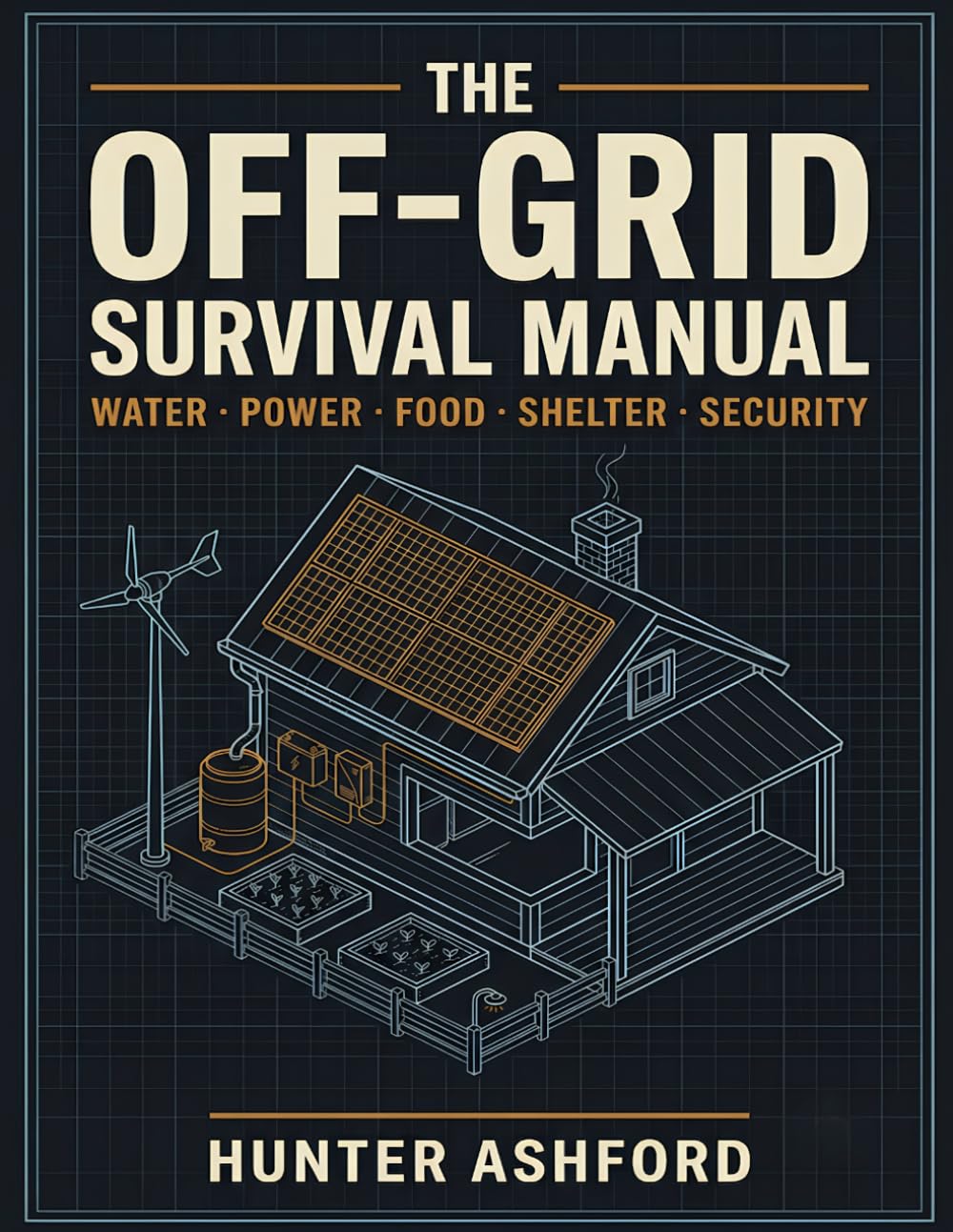
More than twenty builds for water, power, food, shelter, security and emergency, each with a labeled diagram, a real materials list, a cost band and a worth-it verdict.
About the book